


Launched in late 2019, the Juliana Trail is a long-distance walking route that encircles Triglav, the highest mountain in Slovenia. It’s a chance to engage with the varied landscapes and communities of the Julian Alps and, by encouraging visitors to explore the region around Triglav rather than just making a dash for the summit, it helps alleviate the pressure on Slovenia’s most popular peak.


-
hidden europe
Slow travel to Europe's off-beat places
![]()
Welcome to hidden europe. We promise a fresh perspective on well trodden trails, and a cool look at undiscovered corners.
01
Good travel writing
Our brief is Europe wide, and we criss-cross the continent to bring our readers some of Europe’s very best travel writing. We approach every topic with passion, insight, conviction and authority.
02
Offbeat places
We invite you to look beyond the usual tourist trails — or, if you prefer, stay at home, take out an atlas and enjoy our enthusiasm for the offbeat, the eclectic and the everyday.
03
Value driven
hidden europe is a curated collection of words in print and online that has, over two decades, celebrated European
lives and landscapes as part of the publishers’ wider commitment to promote liberal values and mindsets.
#EscapeTheHype
hidden europe aims at discovering the exotic in the everyday. The places we feature are unhyped and unsung yet full of interest. If you want to understand Europe's rich cultural diversity, this is the site for you.
#SlowTravel
hidden europe attends as much to the journey as to the destination. We take the train to Belarus and the ferry to Iceland. And the prose is as unhurried as the journeys it describes.


#StayCurious
We feature genuinely out-of-the-way places. Where we touch down on somewhere more mainstream, the perspective on the place is unconventional. And we never present places merely as points of consumption.
Explore hidden europe
Click on the sketch-map below to search for articles relating to your favourite country (on some devices you will see a list of country names instead). Yet no map is perfect, and for countries not shown on the interactive map — and to explore topics, regions or place names — just use the search box below the map.
- Albania
- Andorra
- Austria
- Belarus
- Belgium
- Bosnia and Herzegovina
- Bulgaria
- Croatia
- Cyprus
- Czech Republic
- Denmark
- Estonia
- France
- Finland
- Georgia
- Germany
- Greece
- Hungary
- Iceland
- Ireland
- San Marino
- Italy
- Kosovo
- Latvia
- Liechtenstein
- Lithuania
- Luxembourg
- Macedonia
- Malta
- Moldova
- Monaco
- Montenegro
- Netherlands
- Norway
- Poland
- Portugal
- Romania
- Russian Federation
- Serbia
- Slovakia
- Slovenia
- Spain
- Sweden
- Switzerland
- Turkey
- Ukraine
- United Kingdom
Latest full-length
additions
We regularly make the full version of texts available that were published in hidden europe magazine.
On average we'll add one article every two weeks. Other articles are available as an excerpt on this website.
hidden europe 62
Lipka Tatars settled in the rural region south of Vilnius in the 14th century, and their descendants still reside in villages in north-east Poland, western Belarus and southern Lithuania. They are a Muslim minority in a region of Europe which is often incorrectly perceived as being homogeneously Christian. We report on Baltic Islam.
hidden europe 16
Finland's Ox Road is one of northern Europe's ancient highways. It skirts lakeshores, crosses gravelly eskers, weaves round moraines and links some of Finland's oldest settlements.
hidden europe 8
Barga is quintessential small town Italy. And Aristo's, the bar and café in the middle of Barga, is the quintessential bar - a spot that is amiable, intimate and safe. Guest author Adam J Shardlow lingers in Aristo's and finds a rich vein of artistic and musical life in the Tuscan town.
hidden europe 67
UNESCO's World Heritage List includes many citations which showcase former mining activities. The extractive industries have led to the development of some of Europe's most distinctive cultural landscapes. But the recent addition of a gold mining site in Romania to the list sparks tensions between conservation and economic interests.
hidden europe 40
A 1924 essay by Joseph Roth on an unsung railway station in Berlin fired our imagination and inspired us to take the train to Gleisdreieck - an elevated station that in Roth's day looked down on a tangled maze of railway lines and sidings. Nowadays, nature is reclaiming the industrial landscapes of yesteryear.
hidden europe 66
Look for the tell-tale Pentecostal dove that marks out the small chapels dedicated to the Holy Spirit. They are found across the Azores, each chapel the hub of a social network that underpins Azorean Catholicism.
hidden europe 46
Think of writers who are intimately associated with a particular city: Kafka and Prague, Joyce and Dublin, Svevo and Trieste... or Pessoa and Lisbon. Pessoa did for Lisbon something which few other leading writers have done for their home city. He wrote a guide for tourists visiting the city. With Pessoa to hand, Iain Bamforth sets out to explore the Portuguese capital.
hidden europe 49
For Odesa writer Issac Babel, his home town was 'the most charming city of the Russian empire'. For many visitors today, Odesa is one of the most striking Black Sea ports. Join us as we head up the Potemkin Steps to discover Odesa.
hidden europe 47
We take a look at a European city which has often styled itself as a place of refuge. Geneva has long taken a stand on human rights. So join us as we explore the many sides of Geneva, the Swiss city that turns out to have impeccable radical credentials.
hidden europe 24
Europe's city squares are being radically reshaped by the arrival of mass tourism. Thus far, Poznan's beautiful central square has resisted the pressure for change. It remains essentially a place for the locals. But change is surely in the offing.
hidden europe 67
The last of the Soviet Union's great ocean liners outlived the Soviet Union. The MS Aleksandr Pushkin made her first visit to Tilbury (in the lower reaches of the River Thames) in April 1966. For over half a century, this classic ship was a regular visit to Tilbury. Renamed the MS Marco Polo, she arrived in Tilbury the very last time in March 2020.
hidden europe 20
It was eighty years ago this spring that Umberto Nobile embarked on the airship Italia. His destination? The North Pole! Read about an expedition that was to prompt the biggest rescue effort in the history of polar exploration.full article available in pdf format
hidden europe 67
Hoek van Holland is a liminal spot, a place not quite of the land and not quite of the sea. We make time for a Dutch town through which generations of sea travellers have passed but few lingered.
hidden europe 28
The port city of Genoa commanded huge influence on account of its mercantile acumen and its early schemes for the management of public debt, which paved the way for modern banking. Today the city of St George still has the face of business.
hidden europe 51
The fear of being murdered on a train was once so great that affluent country squires donned old clothes to travel with the crowds in third class. It was, they judged, safer than travelling in splendid isolation in first class. We take a look at how the railway carriage changed through time.
hidden europe 53
The Ertholm Islands (literally 'Pea Islands') are the easternmost fragments of Danish territory, even further east than Bornholm. Just two islands in this small archipelago are populated: Christiansø and Frederiksø. In the 19th century, Frederiksø served as a place of exile - a prison island.
hidden europe 23
Join us as we visit an archipelago of islands in the Atlantic off the southwest coast of England. The Isles of Scilly are a remarkable outpost - lush, verdant and, at their best, almost Caribbean in demeanour.
hidden europe 57
The Anglesey Arms by the quayside has long since closed. And it's been many a long year since the last ferry left Dún Laoghaire for Britain. But this erstwhile port just down the coast from Dublin still has something of the elegance and grace that it had in the heyday of the packet steamers.
hidden europe 33
The shipyards in Szczecin once built some the world's finest and fastest passenger liners. But today the cranes are silent, and the city of Szczecin is struggling to define its role in modern Poland. The Baltic port city is a gritty place, and all the more interesting for that.
hidden europe 12
In Frombork, a tiny port on Poland's Baltic coast, the ferry terminal has closed down for the winter. A lone fisherman sits at the end of the pier and looks out over the lagoon to Russia. But the town where Nicolaus Copernicus lived and worked turns out to have a rare off-season appeal.
hidden europe 51
Some commentators say it is the most interesting thing taking place in the Jewish world today. The renaissance of Jewish life and culture in Poland is remarkable. In this feature, we take the pulse of Jewish Warsaw.
hidden europe 43
The humblest homes in many villages in the Carpathians are built of wood. So, too, are the grandest buildings - almost invariably the church. Wood has its own benign beauty, and it is the carrier of tradition. We explore the wooden architecture of that part of the Carpathian region which lies to the east of the High Tatras.
hidden europe 57
Join us to discover the Polish village of Wojnowo which was created from nothing almost 200 years ago. A community of devout Russians arrived on foot and settled on the reedy banks of the River Krutynia.
hidden europe 63
Not far from the Czech border, in the southernmost part of Polish Silesia, lies the monastery of Krzeszów (formerly known by its German name of Grüssau). It was to this quiet spot that manuscripts and books from Berlin were sent for safe keeping in the Second World War. These days, pilgrims make their way to the monastery as a place of prayer.
hidden europe 28
Tumbling off the train and riding the trolleybus over to the other side of the river is a fine introduction to Vitebsk. The Belarusian city is precise and orderly: Swiss efficiency colliding with Soviet style. And at the annual Slavianski Bazaar, Vitebsk is a city that knows how to party.
hidden europe 17
The tides in the Mawddach estuary never come too early. Nor too late. The rain never beats too hard on the road to Abergwesyn. hidden europe editor Nicky Gardner celebrates the communities in rural Wales where she once lived.
hidden europe 21
With the disintegration of the Soviet Union, the Baltic port of Kaliningrad found itself strangely isolated from the rest of Russia. Hemmed in by the European Union, the city of Kaliningrad is rethinking its role in the modern world. It is a remarkable city in a remarkable region.
hidden europe 12
Amid the parks and palaces of Potsdam (near Berlin) is an area known as the Neuer Garten ('New Garden'). For almost fifty years, part of it was an extraordinary 'forbidden city' - a place reserved for the Russian military and the KGB. hidden europe explores this area through the eyes of one woman.
hidden europe 59
Some of the best academic minds in Britain spent the Second World War writing guidebooks about far-flung places. We explore a clandestine area of professional geographical endeavour which resulted in the Naval Intelligence Guides – often called the Admiralty Handbooks.
Latest and popular
We have published 70 issues of hidden europe travel magazine and over 500 issues of our electronic newsletter called Letter from Europe. Enjoy a selection of articles and blog posts below.
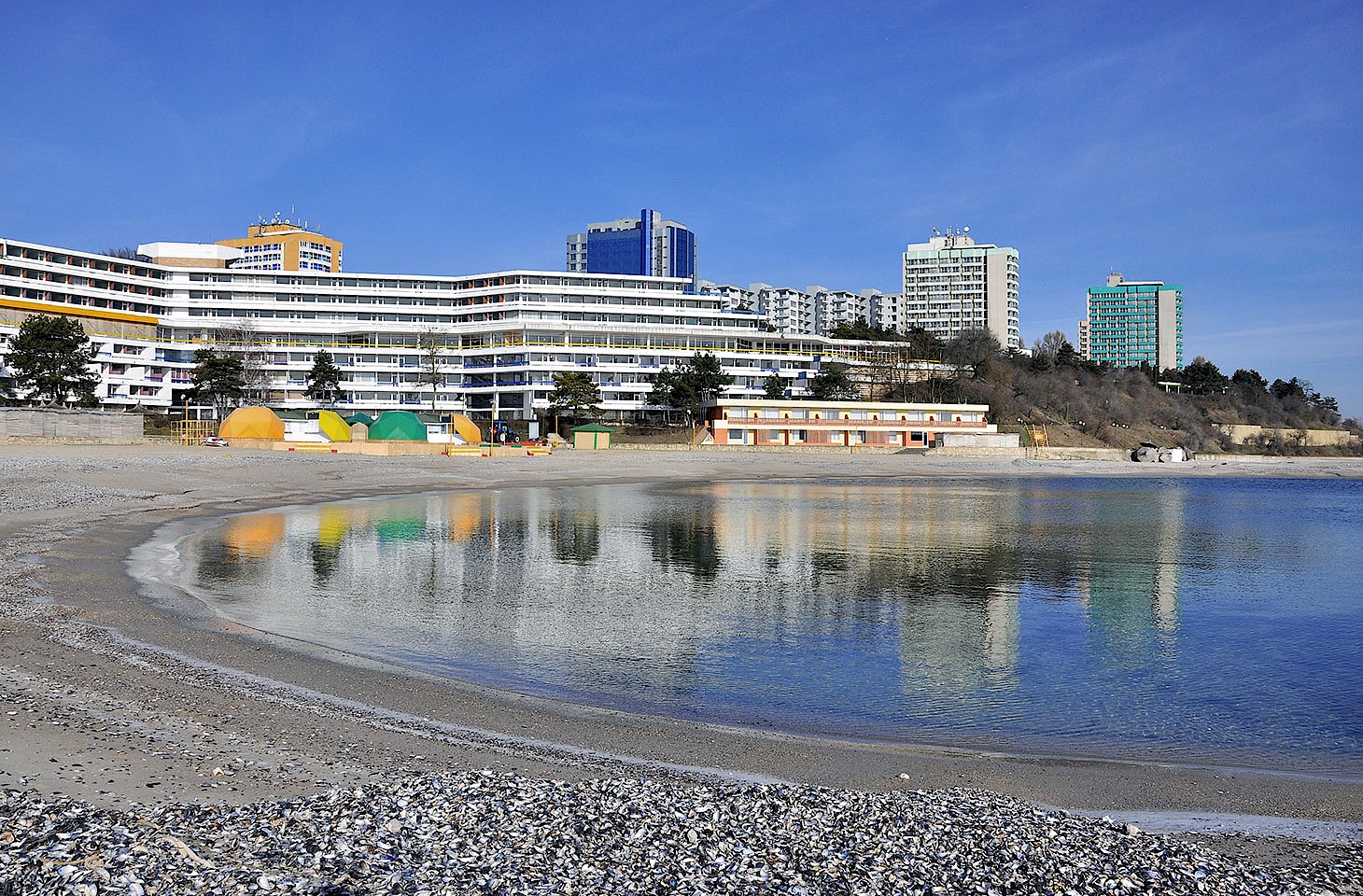
Five or six decades ago, Romania had a sense of building the future and many citizens were eager to dance the night away in Venus or just lie on the beach at Saturn. We recall the voucher tourism of yesteryear - an era when sun, sea and socialism made natural partners.
hidden europe 68: Special spaces
Magazine articleFull text online
A monastery built for two: The Patrick and Joan Leigh Fermor House
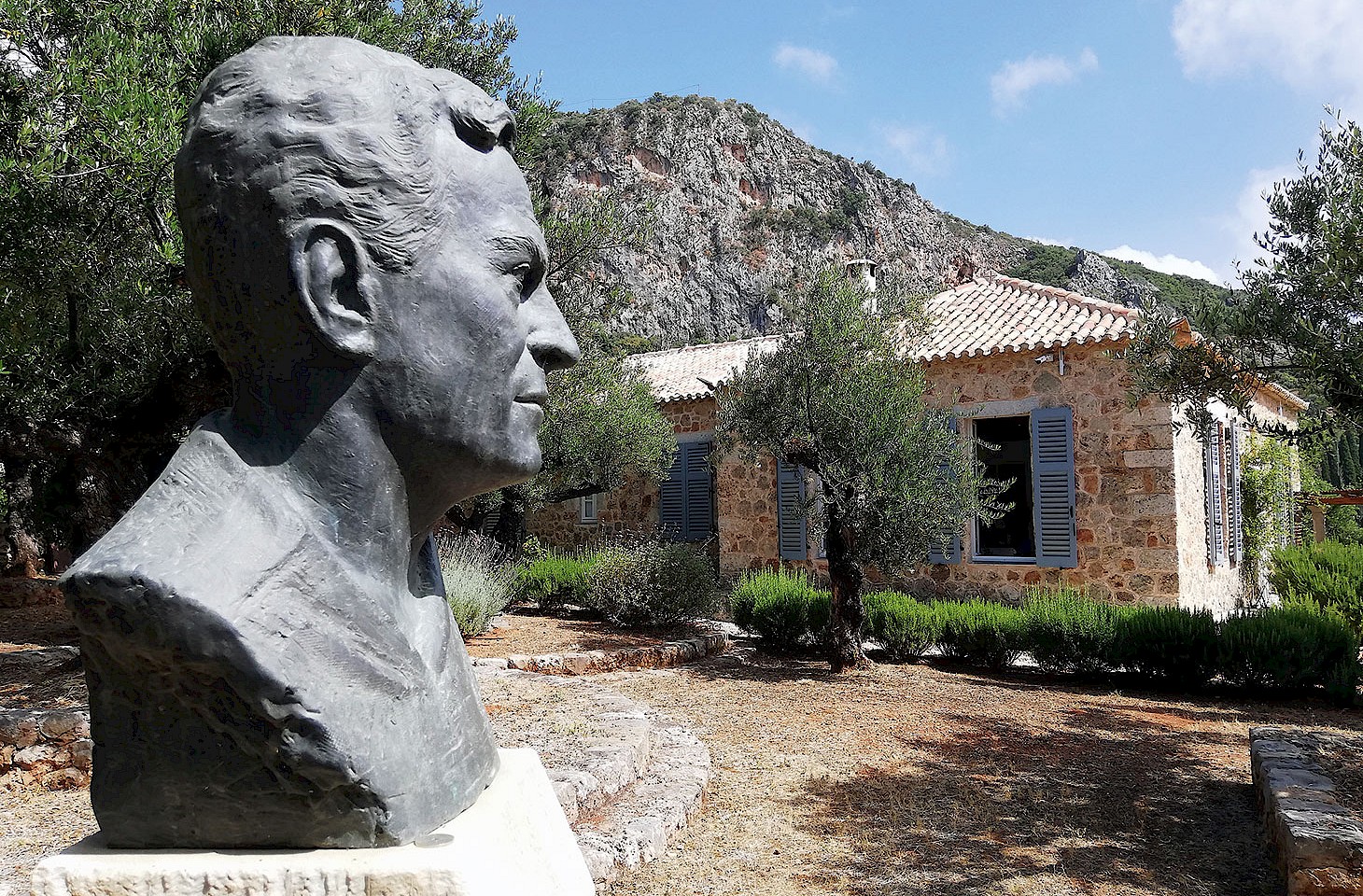
When Patrick and Joan Leigh Fermor settled at Kalamitsi in the Peloponnese, their home became a creative magnet as writers and artists made the journey along dusty roads to spend time with the Leigh Fermors. Duncan JD Smith reports on a recent visit to the one-time home of the couple.
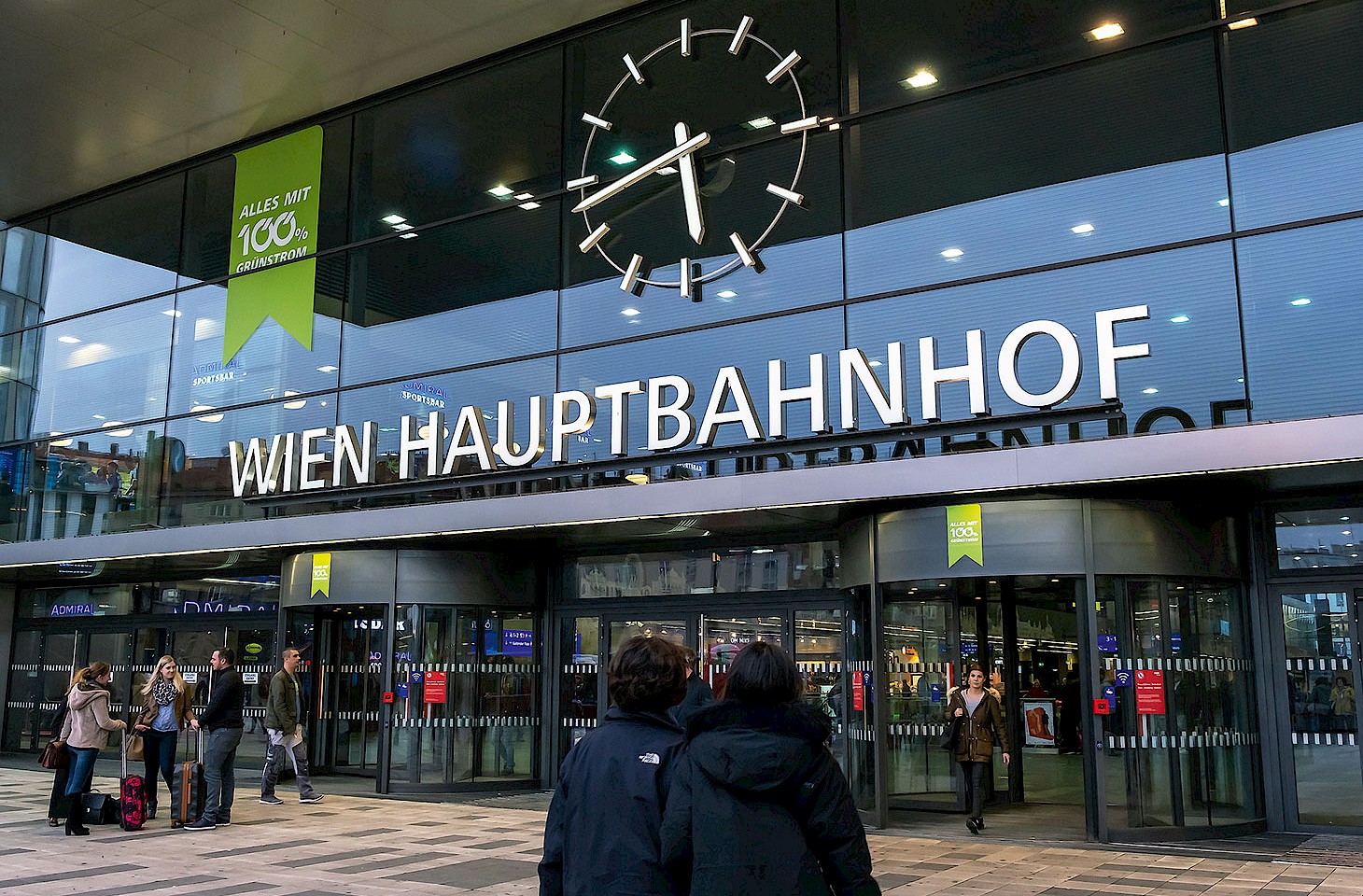
Slower trains from Newcastle to Edinburgh and faster dashes from Cologne to Berlin are in the offing. New rail timetables across Europe come in effect in mid-December 2021. New night trains from Austria to France and from Switzerland to the Netherlands will start. We highlight some key changes in European rail schedules.

In this Letter from Europe we report from an island in the Black Sea that over the last 200 years has been variously controlled by the Ottomans, Romania, the Soviet Union and Ukraine. It is the place where the Greek hero Achilles allegedly dwelt after his death.

With its complex history, Wrocław can be a difficult place to get one's head around. Paul Scraton approaches the Polish city by following the rivers that lend character to the Wrocław townscape.